Chiang Mai has been the perfect city for me through so many different phases of my life, and becoming a mother here was no different.
I've had two children here and we're expecting a third later this year. From a clueless, anxiety-riddled expecting mother, I've grown and learned a lot in the past couple of years, and my birthing philosophy has matured as well.
We're lucky in Chiang Mai to be served by the volunteer doulas of the BirthingCNX team. They connect expecting mothers with resources to choose the right provider, and also help attend births to smooth out the experience with doctors and Thai hospital admin. These knowledgeable ladies curate the definitive birthing resource, so I want to be sure to point you to the right authority.
But I still thought it would be worth putting together a more detailed guide going over my own birth experiences and sharing what I've learned.
I'll be taking a somewhat opinionated stance in this article, because I do in fact have some pretty strong feelings when it comes to health and babies — but I want to acknowledge upfront that I've been very lucky to have had two uncomplicated natural births, so my advice may not always apply to everyone. If your circumstances are different, definitely lean on the birthing team; they've seen it all. I'll be writing from my own perspective, but I'll try to be comprehensive enough that this article is useful for all expecting mothers in Chiang Mai.
BirthingCNX resources:
- Download the BirthingCNX 2026 Guide
- Free childbirth classes, doula referrals, birth plan support, and postpartum meetups
Below you'll find advice for planning your pregnancy, birth, postpartum, and early pediatric care, in order.
Planning Your Pregnancy in Chiang Mai
Insurance — Sort This Out Before You're Pregnant
Affordable, quality healthcare is a top reason Chiang Mai is such an excellent place for families. But if you're reading this guide early enough to plan ahead, it's worth looking into your insurance options — because all the plans I'm familiar with in Thailand will not cover you once your pregnancy is already confirmed. The standard seems to be that you need to have had coverage at that level for at least 10 months prior to your pregnancy.
If you haven't managed to do this, no stress. We opted to pay out of pocket and found the costs to be very reasonable, and from what I gather in my personal circle, this is fairly typical for most expat families here.
Preconception Nutrition
I was lucky enough to be in good health going into my first pregnancy, but I've definitely become much more conscious of this with successive pregnancies — it's such an intense experience that depletes your body. A balanced diet with lots of whole foods is going to serve you best, but the right vitamins can also make a big difference, and there are some supplements that can have a meaningful impact on egg quality prior to conception or become immediately necessary in the early phases of pregnancy.
For egg quality before conception:
- Choline — found naturally in egg yolks, choline has a big impact on egg quality and is chronically underrepresented in standard prenatal formulas. Most women don't get enough from diet alone.
- Vitamin D — deficiency is surprisingly common even in a sunny climate like Chiang Mai, and it matters for implantation. Worth getting your levels checked.
- Omega-3s (DHA) — pull double duty for egg quality and early fetal brain development, so they bridge naturally into pregnancy.
Once you're pregnant or trying:
Neural tube defects are what many doctors will warn you about, and folic acid has typically been the standard prescription. But we're increasingly finding out that many women carry an MTHFR gene mutation that prevents them from processing folic acid effectively — which means methylfolate is actually the more bioavailable form and worth seeking out specifically.
For a base prenatal, I took Blackmore's Pregnancy & Breastfeeding Gold for my first two pregnancies, but I'd now recommend Thorne Basic Prenatal as having a more complete formula. Both are available on iHerb, which is your best bet for quality supplements that aren't always easy to find locally.
It's very easy and affordable to get bloodwork done here. Private clinics and hospitals offer panels at reasonable prices. When I wanted to check my iron levels, I simply asked the hospital to add the test to the blood draw they were already doing. It cost an extra ฿2,000 (roughly $60), which is on the higher side for basic testing in Chiang Mai.
Fertility Services in Chiang Mai
This is outside my personal experience, so I'll keep it brief and point you in the right direction.
For IUI and IVF, North IVF is the most prominent dedicated fertility clinic in the city, with English-speaking staff and a holistic approach that includes acupuncture and nutrition counselling alongside clinical treatments. Kullapat Polyclinic & IVF Center in Chang Puak is a longer-established option, also well-regarded within the expat community.
A popular and affordable alternative is Traditional Chinese Medicine (TCM). Chiang Mai has a number of TCM doctors who approach fertility from a whole-health perspective — think acupuncture, herbal teas, and lifestyle adjustments — before reaching for clinical intervention. Many expat women swear by this route, either as a first step or alongside Western treatment.
Just Found Out You're Pregnant in Chiang Mai?
First of all — congratulations! Take a breath. Chiang Mai is a genuinely great place to be pregnant, and you're going to be fine.
Confirming Your Pregnancy
Pregnancy tests are widely available at any convenience store or pharmacy. Don't be surprised if you're peeing on a strip rather than a stick — budget-conscious Thais means the market skews toward basic test strips over the tidily packaged devices with digital readouts you might be used to back home. They work just as well.
When you're ready to confirm at a hospital, most women go in around 6–8 weeks. You can call ahead or simply walk in — no referral needed. A first OB appointment starts at around ฿600–1,000 out of pocket. They'll take a blood draw, you'll wait briefly, and then have a consult with the doctor.
The single most important thing you can do once you've confirmed your pregnancy is reach out to the BirthingCNX team. They're a volunteer-run community of expat nurses and doulas who've seen it all, and they'll get you oriented faster than any article can. After that, the most important decision you'll make is choosing your OB and hospital — so let's get into it.
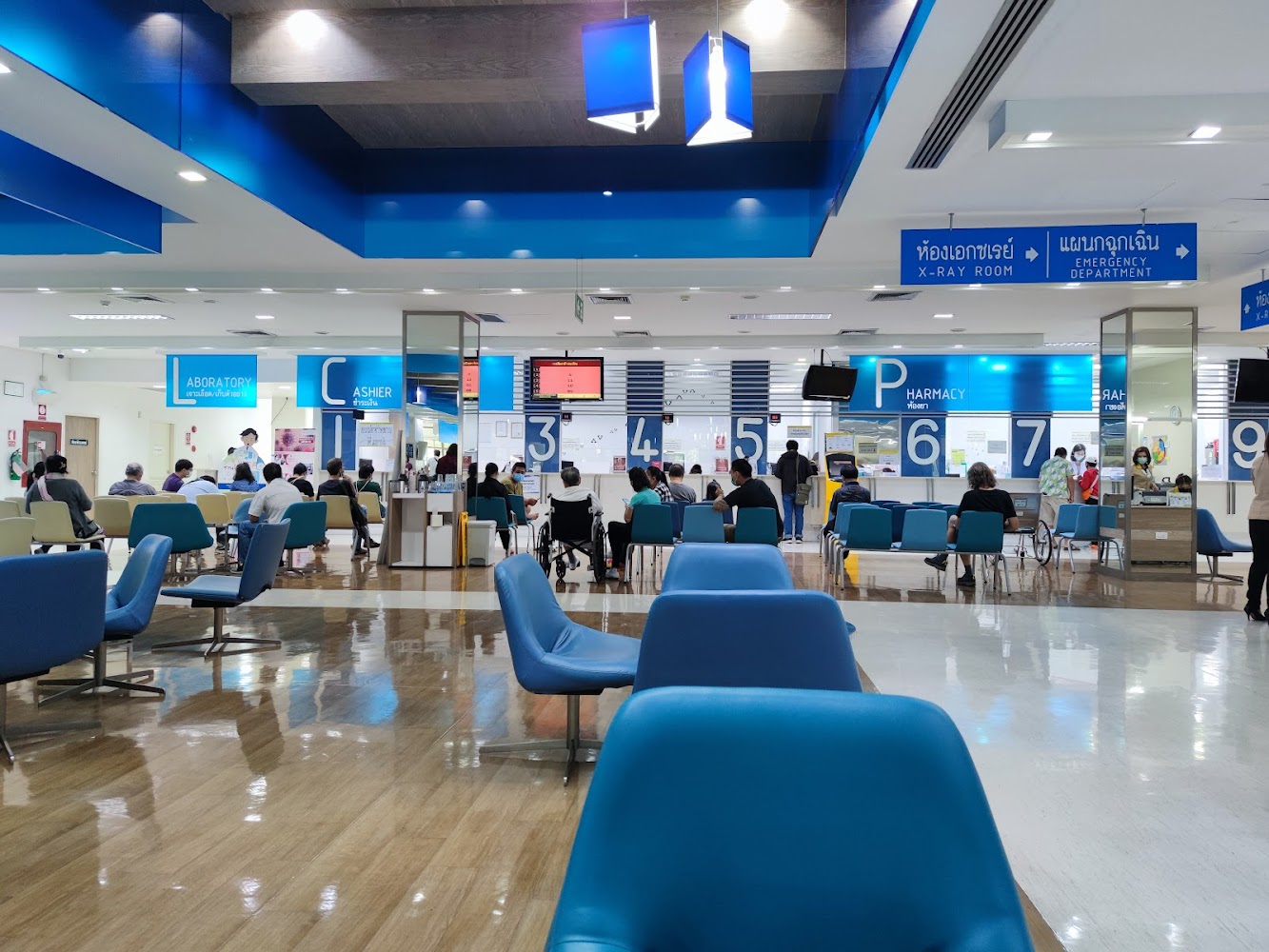
Choosing Your OB and Hospital in Chiang Mai
The most consequential decision you'll make regarding your pregnancy is deciding how you want to deliver — vaginally, or via c-section. That decision then points you in the direction of which OB-GYN will be the best match for you.
A great share of Thai women opt for c-sections, even though vaginal deliveries are widely supported. Private hospitals here are excellent, and a surgical delivery is certainly more convenient for doctors — so it can sometimes become the assumed default, framed as the more convenient option for mothers too. The packages hospitals build around c-sections come with their own appeal, and frankly, the ability to afford such packages carries its own status points in Thai culture. There's a pretty strong finger on the scale here.
Within the expat community, however, mothers overwhelmingly prefer natural births, and this was my strong preference as well. Having been born a c-section baby myself, and not expecting that my skinny frame came with what you'd typically expect of birthing hips, I was mentally prepared for a c-section to be necessary if it came to that. But I'm so glad I made a determined choice for a natural birth and stuck with it — because it's been upstream of so many meaningful aspects of my motherhood journey.
I chose Dr. Suppachai at Chiang Mai Ram after getting in touch with the BirthingCNX team and reviewing their guide, because he seemed the most likely to accommodate my preferences. Sriphat was tempting on price but the wait times put me off, and Bangkok Hospital — the most expensive private option in Chiang Mai — didn't offer me anything compelling enough to justify the markup. I have a number of friends who have delivered there, both vaginally and by c-section, and as far as I know had good experiences.
VBAC in Chiang Mai
VBAC (vaginal birth after c-section) is possible in Chiang Mai, but your OB choice is everything. Dr. Dhammapoj Jeerakornpassawat at Sriphat — a student of the pioneering (now retired) Dr. Supreeya — is known for a hands-off approach and has been recommended by the BirthingCNX team for VBAC. At Bangkok Hospital, Dr. Boonma is the name most often cited by moms who've successfully delivered VBAC there. Either way, have the conversation by 36 weeks at the latest.
How Much Does It Cost to Give Birth in Chiang Mai?
Chiang Mai is dramatically cheaper than Western countries for maternity care — a complete birth experience that might cost $15,000–30,000 in the US (and comparable figures across Europe) typically runs ฿30,000–90,000 (~$850–$2,600) here. Whether you're coming from the US, UK, Germany, or Australia, the savings are substantial. For the wider family-budget picture, see our Chiang Mai cost-of-living guide.
Prenatal appointments
- Most hospitals: ฿600–1,000 per visit, pay as you go
- Bangkok Hospital: bundled prenatal package ฿46,000 (14 visits, 3 ultrasounds, standard labs) or Premium ฿72,000 (adds additional screening)
Vaginal delivery
- Budget (Mae le Dek): under ฿10,000
- Mid-range (Rajavej, Lanna, McCormick): ฿22,000–38,000
- Private (Ram, Sriphat, Bangkok Hospital): ฿49,000–70,000
C-section
- Budget: ~฿25,000
- Mid-range: ฿35,000–60,000
- Private: ฿67,000–87,000
What's typically included in a package: OB and nursing fees, delivery room, medications, a 2–3 night room stay, and basic newborn care.
What's not included and will be charged separately:
- Newborn nursery: ฿10,000–25,000 depending on the hospital and whether your baby needs extra care
- Any complications, additional procedures, or extended stays
- The Ram VIP card (฿100, bought before admission) gives 20% off inpatient costs at Chiang Mai Ram — worth knowing about
For most expat families paying out of pocket, a straightforward vaginal birth at a reputable private hospital lands somewhere between ฿60,000–90,000 ($1,700–$2,500) all-in. A c-section at the same level runs ฿80,000–110,000 ($2,250–$3,100).
Epidurals in Chiang Mai
Not something I was looking for, but worth flagging: epidurals are only available at Bangkok Hospital and Klaimor, and from what I've gathered they're not the same as a Western labor epidural. Rather than dulling pain while preserving the ability to push, these fully numb the mother — which could make it harder for you to effectively push the baby out without further medical assistance. Something to factor in if this matters to your birth plan.
NICU in Chiang Mai
Also outside my personal experience, but if you have a high-risk pregnancy it matters which hospitals have real neonatal intensive care capacity. Based on the BirthingCNX guide and my own research: Maharaj Nakorn Chiang Mai Hospital (Suandok), Bangkok Hospital, Chiang Mai Ram, and Sriphat all have confirmed or well-regarded NICU-level services. The smaller hospitals do not.
Hospital Comparison in Chiang Mai
Always confirm current pricing directly with the hospital.
| Hospital | Natural Birth | Price | Epidural | NICU | Notes |
| Chiang Mai Ram | Yes — with the right OB | ฿฿฿ | No | Yes | Strong expat community. Blood draw and IV required on admission — cannot be refused. |
| Bangkok Hospital | Yes — Dr. Boonma offers VBAC | ฿฿฿฿ | Yes | Yes | Most expensive private option. Comprehensive prenatal packages. |
| Mae le Dek (Chiang Mai Mother & Child Hospital) | Yes — rotation of doctors, variable | ฿ | No | No | Government hospital. Thai-language navigation — bring a Thai-speaking friend. |
| Klaimor | Yes, but one OB on staff and no medical coverage on weekends | ฿฿฿ | Yes | No | Significant caveats on staffing. |
| Rajavej | Limited — one OB. Must have 3+ appointments with Dr. Mungkorn to secure package price. | ฿฿ | No | No | Most affordable private option. English-speaking patient reps available. |
| Sriphat (Suandok) | Dr. Dhammapoj offers hands-off VBAC; otherwise limited for new foreign natural-birth patients | ฿฿ | No | Yes | Best value among the larger hospitals. Birth certificate issued on discharge. |
| McCormick | No — vaginal with routine episiotomy and Pitocin only | ฿฿฿ | No | No | Christian-ethos hospital. |
| Lanna | No | ฿฿ | No | No | Limited breastfeeding support. |
The table above is a starting point — the BirthingCNX Birth Booklet has far more detailed and current information on each hospital and OB, including current OB profiles and doula referrals. You can request the latest edition from the BirthingCNX team.
Home Birth in Chiang Mai
Home birth isn't formally offered in Chiang Mai — there's no midwifery service you can book, and no official pathway for it. That said, I have a number of friends who've gone this route, and it's what I'm personally planning for my third, given that my first two were very quick deliveries. (My second was literally born in the car, two minutes before we pulled into Chiang Mai Ram. Dr. Suppachai was waiting for me at the emergency room exit and his jaw dropped. Lucky for me, the timing worked out perfectly for him too — we clamped the cord and just carried on from there.)
The thing to know about arranging a home birth in Chiang Mai is that you're largely on your own. As far as I know, there are no legally licensed English-speaking midwives anywhere in Thailand offering home birth services. There is an informal network of foreign midwives — licensed in their home countries but not in Thailand — who sometimes serve mothers here, though these are more common down south, and none appear to be active in Chiang Mai at present. It's also worth knowing that it's technically illegal for an unlicensed medical professional to attend a birth in Thailand, and licensed Thai midwives typically operate only within hospital structures or serve rural communities.
That said, there are a few people in this space worth knowing about. Jamie Vinion is an expat mom who has lived in Pai for a long time, offers a freebirthing course, and has helped many mothers find a more independent path to giving birth. Patt Tavira is a doula now offering birthing classes and support to expecting mothers in the region. Neither of these women, nor the BirthingCNX team, formally attend births as the primary medical provider — but they are valuable resources for anyone exploring this route.
Those disclaimers aside, I'm personally a big believer that women were beautifully designed to birth their children, and that with the right preparation and support, home birth can be a viable option for many women. I have reservations about birth being considered a medical event by default, so I'll come back to this topic in more depth — hopefully after my own successful home birth.
Prenatal Care in Chiang Mai
Prenatal Appointments and Packages
Many hospitals in Chiang Mai operate OB clinics on a walk-in basis — no referral needed, just show up during clinic hours. If you want to avoid the wait and get your preferred doctor though, it's very easy to call ahead and get an appointment.
How many appointments you actually need is a more personal question than conventional medicine tends to let on. With my first pregnancy, I wanted all the tests. I dutifully made a follow-up appointment with Dr. Suppachai at the end of every visit — no matter how much I hated having my blood drawn or felt like peeing in a cup this many times was overkill, I did as I was told. By my second pregnancy I felt a lot more comfortable, so I opted for fewer visits, spoke to Dr. Suppachai about it, and went per his recommendations.
This time around, given my previous experiences and deepened religious convictions (I wouldn't terminate a pregnancy anyway, so the useful information from most early tests is thus irrelevant), we're keeping it to a minimum. I went in for the 20-week detailed anatomy ultrasound — that gives genuinely useful information, because if there are in fact any unusual circumstances, I want to know about it in advance. I was going to skip the gestational diabetes test this time around, but my eldest really wanted to "see" the baby, so I humored her and the doctor, submitting to having my blood drawn and doing an extra ultrasound. I'll go in again for ultrasounds closer to delivery, which I've always found valuable for understanding the baby's position and doing yoga and other work to encourage an easier birth.
If you want the full conventional prenatal protocol, Dr. Suppachai and the other OBs at the main hospitals will give you exactly that. This is just my experience of what's possible when you're low-risk, informed, and willing to have an honest conversation with your doctor.
Prenatal Yoga, Pilates, and Massage in Chiang Mai
Prenatal yoga is one of those things expat moms frequently ask about in the Chiang Mai Expat Moms Facebook group, and yet consistent options remain surprisingly hard to pin down. Your best bet is to check with your local studio — if you can help recruit a few other pregnant students, many teachers will be happy to put together a class.
For pilates, KZ Pilates is well-regarded in the expat community, and one of my friends has praised HHH Rehab & Pilates Studio.
On massage, there's an important distinction worth knowing: traditional Thai massage works on acupressure points throughout the body, and because of this most places will simply decline to work on you once they know you're pregnant — this is standard practice and the right call. What you're looking for instead is a therapist with specific prenatal massage training, which is a different skill set.
The places that offer this properly: Pause Massage in Hang Dong has therapists trained specifically in prenatal massage and is worth the trip if you're not already out that way. Fah Lanna Spa offers prenatal massage from week 13 onward, across multiple branches. Cheeva Spa has also been recommended by moms in the community.
It's also worth asking around at places near you — I was delighted to find that the massage shop closest to my house has a therapist qualified to do prenatal work. I won't be sharing her details here, partly because she's surly, literally half deaf, and doesn't speak a lick of English, but the point stands: don't assume your local place can't help, it's worth asking. If they can't, don't push it.
For me personally, having someone work out the tension in my neck and shoulders in the first trimester made a huge difference for my comfort. Later in pregnancy, gentle relaxing massage and some support adjusting the hips has been just as valuable. If you find someone good, hold onto them.
Childbirth Classes in Chiang Mai
The BirthingCNX team runs free childbirth education classes covering labor, delivery, postpartum care, newborn care, breastfeeding, and infant CPR — typically across four sessions with a fifth class after babies arrive. If this isn't your first baby, they also offer a two-hour refresher. For many first-time moms, these classes become the core of their community in Chiang Mai — the women you meet in that room often become "your people" long after the babies have arrived. Contact the BirthingCNX team to get on the schedule.
For hypnobirthing, Patt Tavira — who we've mentioned in the context of home birth support — offers an online hypnobirthing course and periodically runs in-person classes and workshops in Chiang Mai, and is my personal recommendation.
The BirthingCNX guide also points to Nicholas Harris at the Chiang Mai Wellness Centre, a Master-level member of the British Society of Clinical Hypnosis, for one-on-one hypnobirthing sessions.
Writing Your Birth Plan for a Thai Hospital
I'll be honest — giving birth is what sent me down the crunchy-mom rabbit hole. I actually had my first in the US, for personal family reasons unrelated to the birth or anything medical (I ended up there late in pregnancy and decided to stick around). I was horrified at the prospect of delivering with an unknown OB, so I felt genuinely lucky to find a wonderful, very affordable midwife with whom I could deliver at a freestanding birth center. She was big on informed consent, had me do a lot of reading, and I trusted her completely — a mother of five and a seasoned practitioner. That experience shaped everything that followed.
Here's the rundown of what I've carried into my births here in Chiang Mai, roughly in the order it becomes relevant:
- Who's in the room. I wanted my husband present for support — but not, shall we say, at the business end. Worth being specific about this with hospital staff.
- Birthing environment. Low light, quiet, and to be left alone as much as possible. The idea of strangers — medical or otherwise — wandering in and out, poking and asking questions, is not conducive to something as physiologically sensitive as birth. I made this clear and it was respected.
- No epidural. For my own reasons and circumstances — and frankly because I didn't have access to one for my first. Breathing, visualization, and mantras carried me through, including the worst part of labor in the back of a car. I've come to believe in this approach.
- Freedom of movement. Being able to walk, change positions, and not be forced onto my back for delivery made a real difference for me. This is something you should put in writing and be prepared to advocate for.
- No artificial rupture of membranes. I was determined to keep things as physiological as possible and did not want my membranes broken to speed things along.
- No episiotomy. Luckily I didn't tear with either birth, but I would have declined the cut regardless. It's worth stating clearly in your plan.
- Delayed cord clamping. I wanted the umbilical cord to drain white and still before cutting. You need to ask for this explicitly.
- Immediate skin-to-skin. Rather than having the baby whisked away to be washed and weighed, I wanted that golden period of first contact. Both of my babies wanted to root and latch right away — that immediate connection matters to me enormously and I wasn't willing to have it interrupted by routine hospital procedures.
- No fundal massage. This wasn't something my midwife offered in the US, but it was something I had to aggressively decline at Ram Hospital. Know that it may be offered and that you can refuse it. The reasoning is that it helps the placenta to detach, but this can happen on its own just fine.
- Placenta. With my first, my midwife encapsulated my placenta and encouraged me to consume it as part of my postpartum recovery — and I did. At Ram with my second, I didn't know where I could get it encapsulated and didn't end up asking for it. If this is something you want, you'll need to plan ahead and arrange it yourself — the hospital won't offer it.
- Vitamin K and Hep B. I opted out of the vitamin K shot and the Hep B vaccine for my newborns. Instead I administered vitamin K as drops, purchased in advance. This is a personal decision and one worth researching and discussing with your OB before the birth.
- Feeding preferences. Make it explicit to nursing staff from the start that you intend to breastfeed and do not want formula given to your baby in the nursery.
It's worth saying plainly: almost none of this is standard in Chiang Mai hospitals. Dr. Suppachai was accommodating on most points, but we had a genuine negotiation over delayed cord clamping — it wasn't a given. Go in knowing what you want, and be ready to discuss it with your OB well before your due date, not in the delivery room.
And while I have strong opinions, I have plenty of friends who made totally different choices, rated their birth experiences highly, and have perfectly healthy babies. This is my path, not a prescription.
The most important thing I can tell you about a birth plan in a Thai hospital is this: write it down and go over it with your OB well before your due date. The BirthingCNX team can help you think through all of this — reach out early.
Labor and Delivery in Chiang Mai
What to Expect When You Arrive
I should note upfront that neither of my babies ended up being born at the hospital — so what follows is drawn from the BirthingCNX guide and the experiences friends have shared with me, rather than my own direct experience of labor and delivery in a Chiang Mai hospital.
When you arrive, you'll be admitted and moved to the delivery floor — Ram's delivery rooms are on the 2nd floor, Sriphat's on the 12th, Bangkok Hospital's on the 3rd, and Rajavej's on the 3rd. Once you're settled, your OB will be called. The head nurses in the birthing rooms at Ram, Sriphat, and Bangkok Hospital speak enough English to communicate with you.
One thing to know about Ram specifically: laboring women are required to have a blood draw and IV line placed on admission — this is hospital policy and cannot be refused. Rooming-in (baby staying in your room rather than the nursery) is possible at all the main hospitals, though at Rajavej the default policy puts the baby in the nursery for the first 24 hours — you can push back on this if you want your baby with you. If you're breastfeeding, be very explicit with nursing staff that you don't want formula given to your baby in the nursery.
Partners are welcome and encouraged for natural births at all hospitals. For c-sections, partners are generally not permitted in the OR — though it's possible to write a formal letter of request to the hospital director at Ram or Sriphat. If all is well after a c-section, Ram and Sriphat do allow partners to do skin-to-skin kangaroo care with the baby in the labor room.
All the main private hospitals have private rooms with air conditioning, en-suite bathrooms, a couch for a partner, Wi-Fi, and a mini fridge. Thai and international menus are available, and GrabFood and FoodPanda deliver — though you'll usually need to send somebody to collect at the front desk.
Advocating for Your Birth Plan in a Thai Hospital
With my second birth at Ram, I found the nurses extremely pushy — I had to shoo them away several times when they insisted they needed to weigh the baby, despite her nursing contentedly and being perfectly happy where she was. This is exactly where the BirthingCNX volunteer doulas earn their keep. They know the hospitals, they know the staff, and they can be pushy on your behalf so you can focus on what you're actually there to do. If you have a detailed birth plan and strong preferences, having a doula liaise with the hospital for you is genuinely invaluable.
C-Sections and Complications in Chiang Mai
A note on inductions: there are no hospitals in Chiang Mai that currently use cervical ripening agents (like prostaglandin gel) before beginning Pitocin. This is standard practice in the West to prepare the cervix before inducing contractions — without it, induction failure rates are higher, which is one factor contributing to c-section rates in Chiang Mai. If you're facing an induction, it's worth having an informed conversation with your OB about this.
Immediately After Birth
If all goes well, you'll have the option for immediate skin-to-skin contact and delayed cord clamping — but you need to ask for both explicitly, as covered in the birth plan section.
Most hospital packages assume you'll stay overnight for recovery and newborn checkups, and the hospitals are generally reluctant to let you leave early. After my second birth, I was feeling well enough that I wanted to go home that afternoon — Dr. Suppachai gave me a clean bill of health, but the hospital really didn't want us to leave. In the end we had to write and sign our own waiver before they'd let us go. It's worth knowing this is possible if you want it, but you'll have to be firm.
For many moms — especially those with other children at home — the hospital stay is actually a welcome respite, and there's nothing wrong with taking the full rest period offered in the package.
What to Pack for the Hospital
The main hospitals provide most of what you need, but a few things worth bringing:
- Snacks and drinks for labor (and for your partner)
- Your own pillow if you're particular about comfort
- Comfortable loose clothing for postpartum recovery
- Nursing bras and breast pads
- A car seat for the baby
- Copies of you and your husband's passports and marriage certificate (you'll need these for the birth certificate paperwork)
- A piece of paper with your full name, your partner's full name, and your baby's intended name written in both English and Thai — errors on birth certificates from mistranslation are common, and having this ready prevents problems
Postpartum Recovery in Chiang Mai
The First Days
Once you're discharged from the hospital, you're on your own. This is probably one of the most startling realities for first-time mothers. You're either stitched up or still bleeding, you have little to no experience caring for a newborn, and you're suddenly responsible for the most vulnerable little human — who is also the most precious person you've ever known.
Postpartum Supplies
Chiang Mai is an excellent place to stock up. Between Lazada, Shopee, and iHerb deliveries, you can get almost anything you'd find at a Western pharmacy, usually cheaper and often faster than you'd expect. Lots of basics are available at a regular supermarket or even your local 7-Eleven.
The basics worth having at home before you deliver:
- Maxi pads or adult diapers — you'll want to stock up for at least a week's supply; these are widely available. Personally I preferred diapers and found the Sofy brand quite comfy.
- Witch hazel pads — must be ordered online; highly recommended. I would get at least a dozen for the cooling and pain relief.
- Peri bottle — for cleaning up postpartum, especially if you had any tearing; cheap on Shopee. Personally, I was comfortable using the regular bidet-spray our Thai toilets come equipped with anyway.
- Sitz bath — available online; can be nice for a comforting soak for the first week or two.
- Nipple cream — Lansinoh is available on iHerb; local pharmacies carry options too.
- Nursing pads — disposable ones are everywhere; reusable ones can be bought online.
- Postpartum belly wrap — widely used in Thai postpartum culture and easy to find locally.
- Stool softener — ask your pharmacist; the first postpartum bowel movement deserves preparation. My preference is to have magnesium citrate gummies (I order on Lazada) and chew four a day to keep things moving gently.
Yuu Fai — Traditional Thai Postpartum Care
The traditional northern Thai postpartum ritual is referred to as yuu fai, literally "to stay with fire." Similar to TCM, the belief is that mothers need to stay warm for this delicate recovery period. Traditionally this would mean staying close to the hearth and being closely attended to by one's female relatives, as well as a host of herbal treatments. These days you can get the herbal treatment part from a professional. Portable steaming tents can be hired, and someone will set this up in your home along with the herbal blends that will help ease pains and promote recovery.
I haven't done this myself yet, but Thai friends have sworn by it, and since I have a contact now, I'm keen to give it a try next time. One option that comes recommended is Oon Lamoon (อุ่นละมุน), a postnatal-confinement home-delivery service run by Thai traditional-medicine practitioners.
Breastfeeding Support in Chiang Mai
Breastfeeding support quality varies considerably by hospital and by individual nurse — and as the BirthingCNX guide bluntly notes, many Thai pediatricians will tell you to stop breastfeeding at the first sign of difficulty (which is often not medically necessary). The BirthingCNX Birth Booklet has an up-to-date list of breastfeeding-supportive pediatricians, and their doulas can also offer postpartum lactation consultations, which are genuinely one of the more valuable services they provide for first-time mothers.
Pelvic Floor and Physical Recovery
Pelvic floor recovery doesn't get talked about enough. Mae Ping Physical Therapy has been specifically recommended for pelvic floor work by moms in the community.
A personal recommendation: Launa Blackham is a dear friend and a marvelous osteopath with over 10 years of experience and post-graduate training in Traditional Osteopathy, Fertility Massage, and Womb Massage Therapy. She offers a beautiful postpartum womb massage and is in Chiang Mai part of the year. Reach out to her on Facebook for availability.
Mental Health and Community
The isolation of new motherhood in a foreign country is real, and worth taking seriously. A few community touchstones worth knowing about: BirthingCNX hosts monthly meetups for families with babies under one year — check in with the team for the next date — and the Little Owls Playgroup meets every Tuesday and Friday at rotating locations around the city (typically moms with babies and toddlers).
I organized a women's sharing circle specifically for mothers when my first was about six months old, and it was truly a lifeline. I was struggling and overwhelmed with — not just a new baby, but an identity shift, a relationship that felt radically different as a dependent, limited time for my usual self-care. Being with other women who were experiencing the exact same challenges helped tremendously. Talking about it didn't necessarily fix things, but it helped me realize I was not alone and that this craziness was normal, and for the most part would get easier in time.
Newborn Care in Chiang Mai
Finding a Pediatrician in Chiang Mai
You don't choose your first pediatrician — whoever is on call at your hospital when you deliver will follow your baby until discharge. After that, you're free to continue with that doctor or switch to someone you prefer.
If you want to be more intentional about it, the BirthingCNX Birth Booklet has an up-to-date list of pediatricians known to be breastfeeding-supportive and expat-friendly.
Infant Services in Chiang Mai
Claryn Neo runs a well-regarded infant massage course — research-backed for better sleep and reduced fussiness, and a lovely way to build connection in those early weeks. For osteopathic adjustments for newborns, including colic, the BirthingCNX guide points to Dr. Ben Thompson at Chiang Mai Osteopathy. The BirthingCNX team also has donated maternity clothes to give away — ask when you get in touch. And when you're ready for regular help, our guide to finding a nanny or daycare in Chiang Mai covers what's available and what it costs.
Birth Certificates and Passports in Chiang Mai
Thai Birth Certificate — The Amphur Process
After your baby is born, you'll need to obtain a Thai birth certificate from the local government office — the tessabahn — located across the street from the US Consulate. Before you can do this, you'll need the face pages of both parents' passports officially translated into Thai. Star Translation Service does this for ฿300 per page and can often turn it around the same day, or while you wait if they're not busy.
One important note: errors on birth certificates are common when hospitals transliterate foreign names. When you hand over your passports for paperwork, also give the hospital a piece of paper with your full legal name, your partner's full name (and mother's maiden name), and your baby's intended name written in both English and Thai. Don't rely on the hospital to get this right from the passport alone.
Sriphat is the most convenient option for this process — they issue the birth certificate directly on discharge, so you don't need a separate trip. Ram will send a partner to collect the documents if you request it, but avoid their in-house translation service (฿1,000 and takes a week — Star is faster and cheaper).
Leaving Thailand with Your Newborn
One thing worth knowing upfront: babies do not require a Thai visa. They can remain in Thailand indefinitely — but they do need a valid passport from their country of citizenship to leave, and will need either a visa or visa-free entry upon return. So getting that passport sorted is important but not urgent. (For the parents' side of the paperwork, see our guide to long-term visas for expat families.)
The Thai birth certificate, once translated into English by Star Translation, is the foundational document for all consulate and embassy applications. Star also does passport photos — four prints for ฿100, about 10 minutes — which covers the photo requirement for most nationalities.
Passports and Citizenship by Country
The BirthingCNX guide covers the passport and citizenship process in detail for US, Australian, Canadian, UK, French, German, and New Zealand citizens. Rather than reproduce that here, request the latest Birth Booklet for the most current information — consular processes change and the guide is updated regularly.
For US citizens: apply for a Consular Report of Birth Abroad (CRBA) through the US Consulate in Chiang Mai. Submit your application online first — the consulate will contact you to schedule an appointment once documents are confirmed complete. The team is reportedly very responsive.
Welcoming Your Baby in Chiang Mai
Chiang Mai has been an extraordinary place to welcome my children into the world, and I say that not as some generic travel writer, but as someone who has actually done it twice and is about to do it again. The medical care is excellent and affordable, the expat mom community is strong, and the BirthingCNX team offers a level of support and generosity that is genuinely rare. And if you're someone who, like me, ends up wanting to do things a little differently, there's room for that here too.
Whatever kind of birth you're hoping for, start with the BirthingCNX team, build your village before you think you need it, and trust yourself more than you think you should. We are wonderfully made. Motherhood has been the single best thing to ever happen to me, even in my own rather wild and worldly life. The challenge of pregnancy and birth is part of what makes it so meaningful, and I hope this guide has helped you feel more prepared, more supported, and more excited to welcome your little one in Chiang Mai.